How We Protect the Most Vulnerable Animals
February 13, 2026
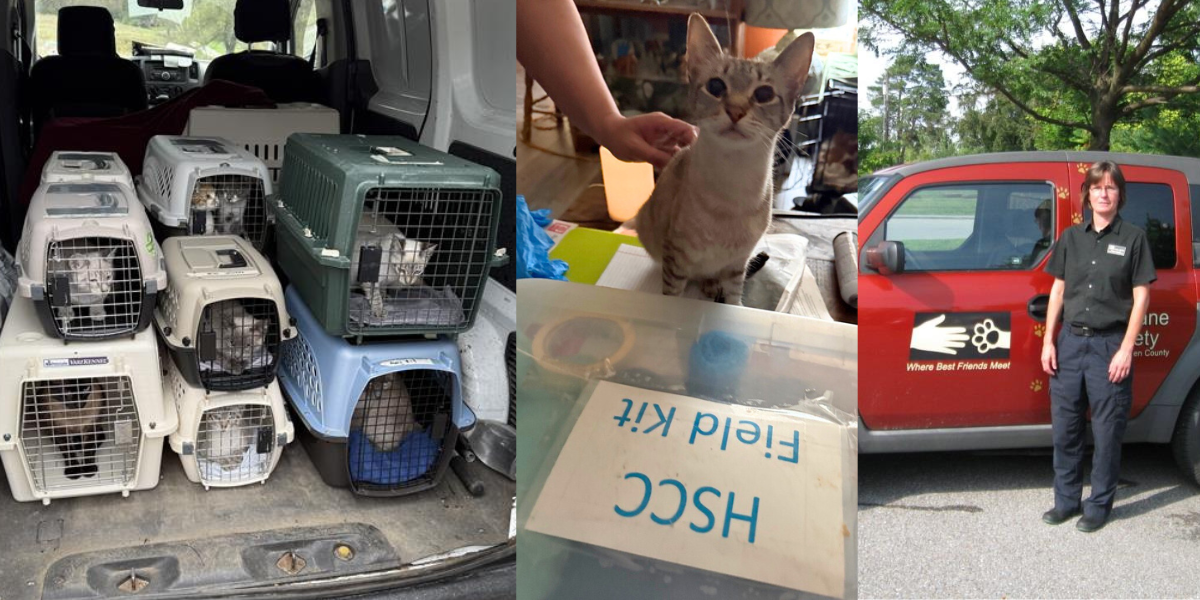
Summer of 2009: I met Brie, a 4 week old black tabby kitten who was joyfully playing with fabric hanging from the ceiling inside the trailer. Brie sat upon the floor, which was covered in trash piled 4 feet high along the walls. Born into a hoarder’s environment, Brie slept, ate, and played amongst rotting food, hundreds of buckets of human waste, and feces overflowing from the litter pans. Brie was one of nine cats seized that day. Brie made it out alive unlike some of her other kitten friends who suffered from respiratory disease due to the unsanitary conditions inside the trailer.
Gloria, summer of 2002: I received a complaint about a roommate who kept her dog in a crate all day, and the dog was in need of vet care. I arrived at the house and the owner was home. She let me in, and without seeing Gloria, I had a hunch that I knew what was wrong with her. The smell that filled the air and permeated the environment was characteristic of a skin condition. If I were to bottle this smell for you to experience, it would cause your nose to flare, your brows move forward on your face, your eyes to squint and your head to quickly pull back. Walking down the long hallway to her room, the woman opened the door, and I saw that this dog was no one’s best friend. The owner immediately started explaining that she was taking the dog to the humane society that very day. I convinced her to relinquish her pet in the moment and I would take Gloria back with me. Gloria’s entire body, her head, her neck, her legs, her belly and her back was covered in bloody, open sores that were expelling an odorous puss.
Winter of 2013: When animal cruelty becomes a community concern: A man walking down the street in the Old North End of Burlington saw something horrific in front of a bus stop at the busy intersection of North Street and Elmwood Avenue. He called the police and was saddened to learn that an officer was not going to be dispatched to the scene. When I arrived, the animal was gone, and all I found was the dried blood and some fur remaining. When I received a cell phone photo from the witness, my heart sank and an outcry for justice burned inside me. The photo revealed a domestic pet rabbit, brown in color with long fluffy fur that looked so soft and lovely that if you could reach out and touch the fur it would melt in the palms of your hands. This rabbit had been mutilated, it’s body cut in half with its head and front legs impaled on a fence post for all to see, in the Old North End of Burlington.
Summer of 2004: Standing on the porch I stood at the door with the police. An officer looked over to me and said, “You want some Vicks?” I thought, I don’t have a cold and what a funny question to ask just before entering a home to remove almost 30 cats. I simply replied no thanks. When the officer opened the screen door to knock on the interior door, I understood his offer. My nose was filled with the ammonia smell from the cat urine inside the home. The owner sat very angrily on the couch and watched as we loaded each one of her cats into a carrier. There were adults, there were kittens, some were emaciated, some of them had deformities where it looked as if their back legs had been put on backwards. Cats that were white in color had a reddish tint to their fur from the infestation of fleas on them. Some were so weak and sick and covered in urine and feces that they needed to be euthanized.
As difficult as these cases are, there is a silver lining - which bridges the irrational world of Animal Cruelty and brings it into the rational world. This is the space – the Silver Lining - where Brie and all of the other cats seized that day went into the care of the Humane Society, received medical treatment, were held for 6 months while waiting for the court case to complete and after that went up for adoption.
While Gloria was in the care of the Humane Society and receiving medical treatment at one of the local vet hospitals, a staff member from the hospital fell in love with Gloria and adopted her.
Although the rabbit case was not solved, this turned into an opportunity to have a dialogue with the local police department about the significance of this case and resources we could have offered. We were able to show them how we work with knowledgeable veterinarians who could have performed a forensic necropsy to help explain what happened to the rabbit.
As for the cats in the trailer, after receiving medical treatment and some R&R at the shelter, 27 of those cats found new loving homes.
Thank you for lending your heart and listening to how the Humane Society of Chittenden County works to save animal lives in our community and provides resources to the owners.
-JoAnn Nichols, Humane Educator & TNR Specialist
Categories: Blog | Tags: | Posted by: Admin
Adoption Center Hours:
Tuesday-Friday: 1PM - 5PM
Saturday: 10AM - 5PM (Closed 12-1PM for naptime)
Sunday & Monday: Closed
Happy Tails